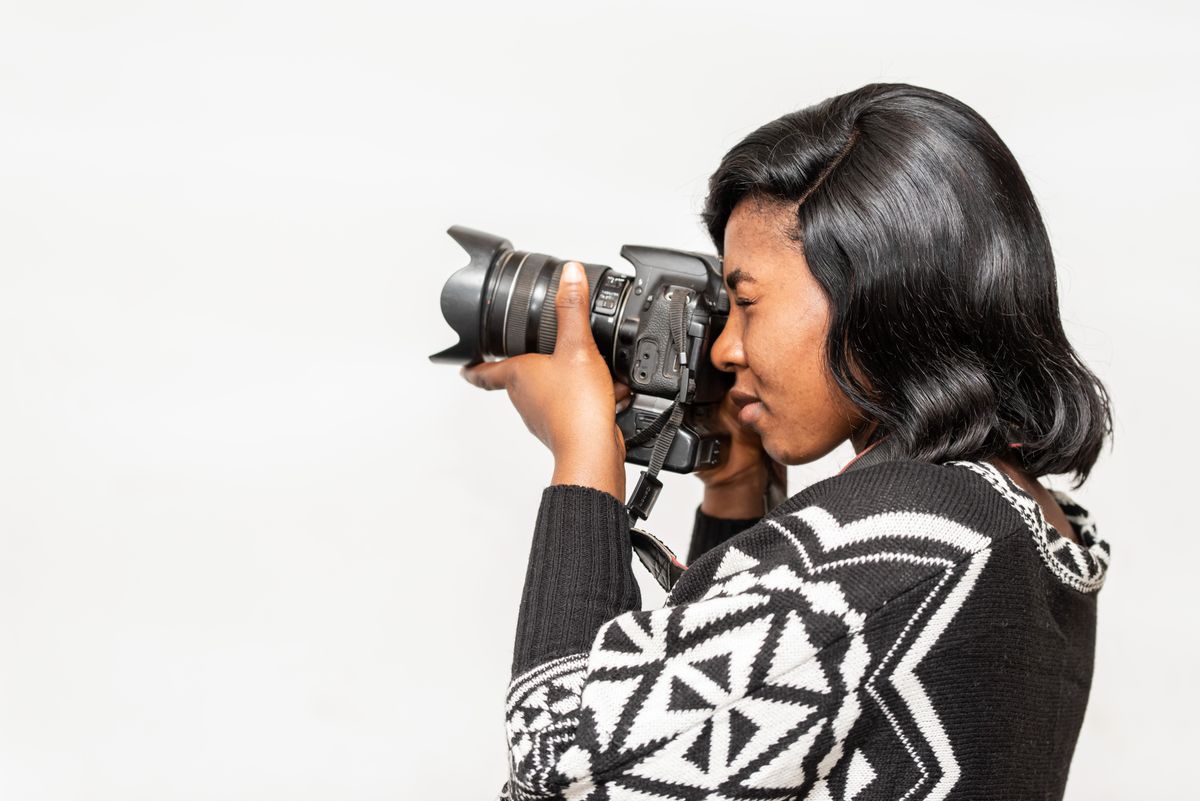
Lulit Alemu
Cinematographer, ASC member · Addis Ababa / New York
Addis Ababa, Ethiopia & New York, USA
About
Lulit Alemu is a cinematographer with credits at Berlinale, the Toronto International Film Festival, and Sundance. She is a member of the American Society of Cinematographers, an honor extended to her three years ago following her cinematography work on a feature that premiered at Sundance. She splits her working time between Addis Ababa, where she maintains a home base and a production office running camera-rental and post-production services for local productions, and New York, where she is represented by a major talent agency for her independent feature, commercial, and music-video work.
She came to cinematography through the East African film school in Addis Ababa, did an attachment at the National Film and Television School in the United Kingdom, and worked her way through the camera department on European and African co-productions before stepping up to director of photography on her first feature ten years ago. She has shot seven features, three documentary projects that received festival placements, and a significant volume of commercial work for European and African brands.
Her mentor focus is emerging cinematographers and directors of photography working to build a body of work that earns agency representation. The transition from camera department to DP. The reel-building. The relationship work with directors. The festival-strategy decisions for first and second features. The agent search and the agent relationship. Independent financing for projects that are not yet inside the studio system but that require crew above the level a no-budget production can support.
She is particularly keen to support women shooting features set on the African continent. The continent's film industry has been growing in specific directions — the Nollywood-Lagos infrastructure, the Nairobi documentary and fiction community, the South African commercial and feature pipeline, the Ethiopian and Rwandan and Senegalese scenes that have made strong festival showings in recent years. The infrastructure is uneven. The financing landscape is complicated. The work she does with mentees focuses on the practical reality of building a sustainable cinematography career across the continent and the diaspora.
Mentees who book with Lulit come from three primary groups. First: camera-department professionals — operators, focus pullers, gaffers, DITs — preparing for the step up to cinematographer credit. The session works the reel, the shorts that should be pursued, the projects to take and the projects to decline, the agent strategy. Second: early-career cinematographers with one or two festival credits trying to build toward agency representation and their first independent feature. Third: writer-directors and directors looking for cinematography pairings for upcoming projects — Lulit has helped match several mentees with directors in this network, although her primary work is with cinematographers and not with directors.
Her style is collaborative. She reads reels carefully and she comes prepared with specific notes on framing, lighting decisions, focus choices, color discipline, and the rhythm of the cut as it relates to the shooting decisions. Her notes are constructive without being soft.
Outside the mentor work she serves on the cinematography jury for a major African film festival annually, has been on the advisory board of an Addis Ababa filmmaker development program for the past four years, and has presented masterclasses at three film schools across the continent. She is the cinematographer attached to two upcoming features — one shooting in Ethiopia next year and one shooting in Senegal the year after — both directed by women.
She has hosted a Cinematography Master Class on Lighting for Darker Skin Tones through the events program here, which was oversubscribed and is being repeated. She is a member of the Creative Arts and Media Circle and is a frequent participant in the cinematography-specific subchannel.
Sessions are 45 minutes. The pre-session brief is a link to the mentee's reel (vimeo or password-protected) and a specific question or situation they want to work. She watches the full reel before the session — she will not give substantive feedback on work she has not actually seen. Sessions structure themselves around the specific work and the specific question. Mentees leave with a written list of specific notes on the reel, specific project recommendations, and contacts to make in the immediate term. Some sessions extend to ninety minutes when the work merits it; the additional time is included at no additional cost as a professional courtesy.
She has mentored cinematographers into festival placements at Sundance, Berlinale, IDFA, TIFF, FESPACO, and the Durban International Film Festival. The work she does is specific, technical, and patient. The book of women DPs shooting on the continent is growing because of work like this. She is happy to be part of it.
Her perspective on the African film industry is grounded in the actual production economics she has seen across her fifteen-year shooting career. The financing structures for African features have evolved across that period. The shift from telefilm and broadcast-driven funding toward streaming-platform commissions has changed the production calendar, the budget structures, and the kind of work that gets made. The festival routing has also shifted as specific festivals have grown their African and African-diaspora programming and as new festivals on the continent have built their own circuit. She helps mentees calibrate their festival strategy to the current market.
On the lighting-for-darker-skin-tones work specifically, her approach is rigorous and technical. The conversation is not an inspirational one; it is about color science, lens selection, lighting setups, color-correction discipline, and the slow accumulation of a visual practice that holds up across many skin tones and many lighting environments. Mentees who work with her on this come prepared with their current technical references and leave with specific additions to their reference library and specific technique notes for upcoming work. The work is craft first and politics second; the politics rides alongside but does not substitute for the technical discipline.
Her engagement in the platform's Creative Arts and Media Circle includes facilitator rotations for the cinematography subgroup and contributions to discussion threads on the topics of African film financing, festival strategy, and the specific craft questions of cinematography for darker skin tones. Her Cinematography Master Class event through the platform's events program has been one of the most-subscribed creative-arts events the platform has hosted, and the repeat scheduling reflects both demand and the consistent session quality she delivers in her mentor practice.
The creative-industries landscape continues to evolve in ways that affect Black women creators and creative-industries professionals specifically. The financing landscape for films, books, and adjacent creative-industries projects has shifted across the past decade. The platform landscape has shifted. The agent-and-publisher relationships have shifted. The mentor practice connects specifically to the senior-level craft questions and to the structural conditions that determine whether individual creative-industries careers progress at parity.